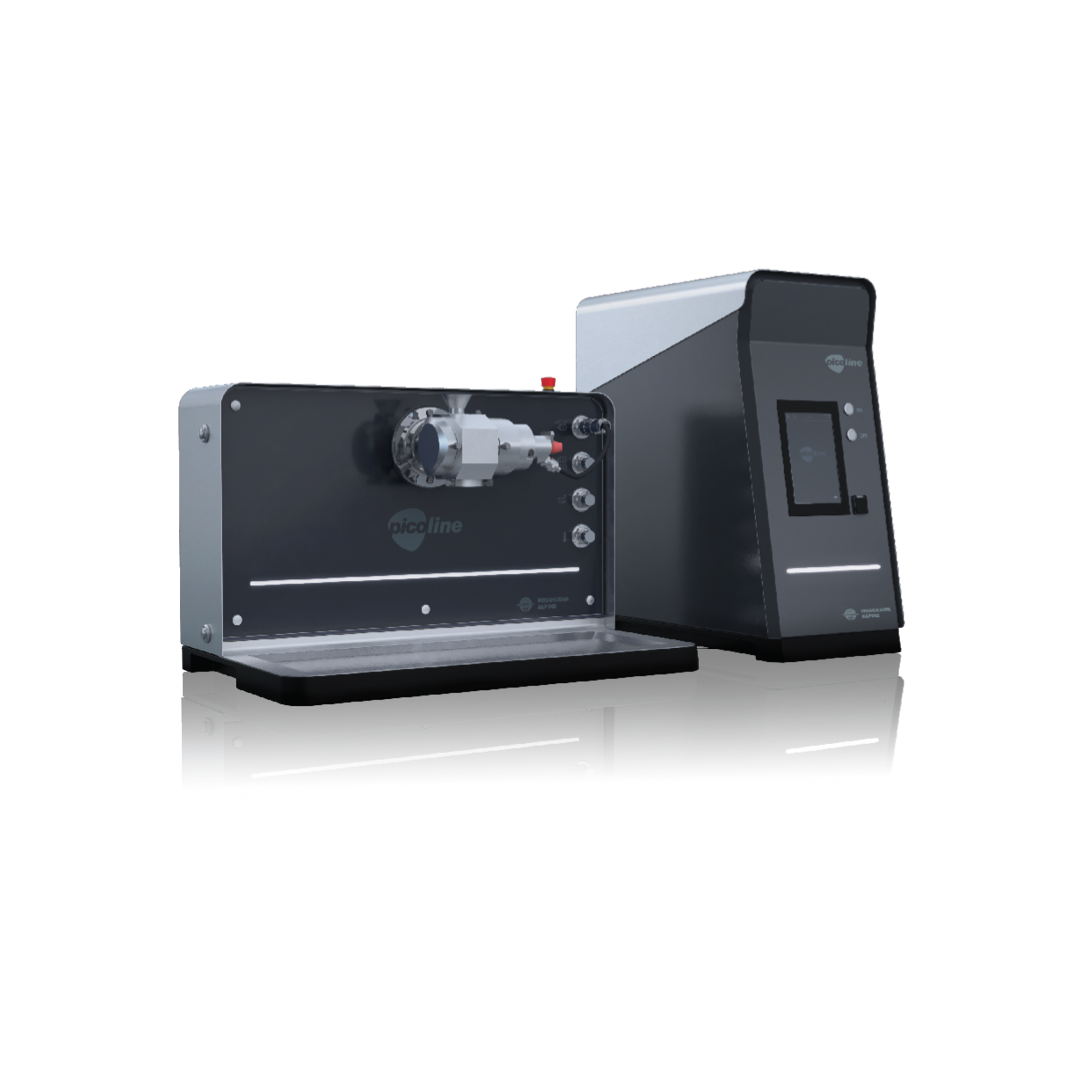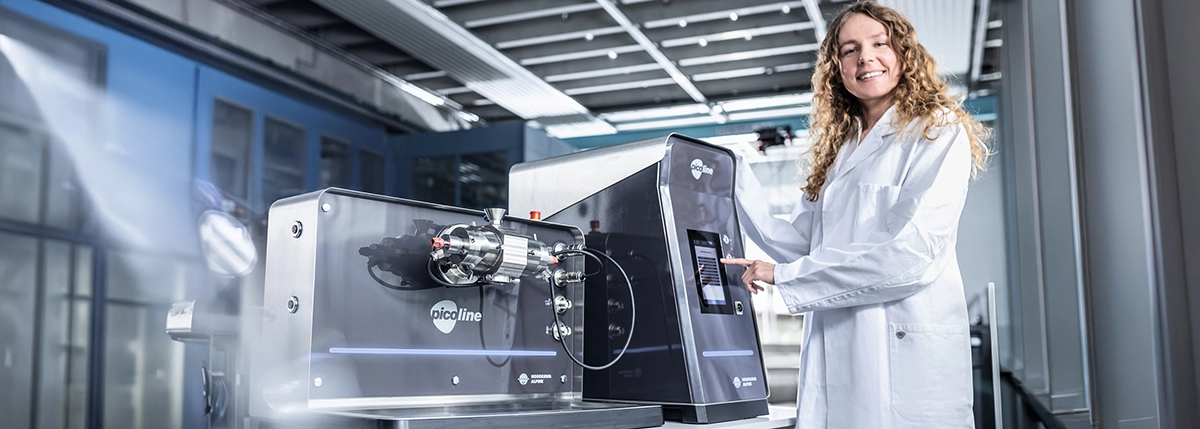
Picosplit laboratory ultra-fine classifier
When the highest standards are required for particle size distribution and product purity, the Picosplit ultrafine classifier delivers impressive results. Its high separation efficiency, ease of use and flexible integration make it a versatile partner for demanding applications. It integrates seamlessly into the Picoline platform.
Your benefits at a glance
- Combination of the classifying head with different types of grinders (coarse material hopper, jet mill, classifier mill) for maximum flexibility
- Classifying wheel and motor bearing gas flushed
- High precision of cut
- Compressed air or inert gas operation
- Space-saving design
- Easy handling
- Designs: Stainless steel and wear-protected (ceramic) version for contamination-free reprocessing, batch mode or continuous mode
- Classifying head based on the ATP air classifier from Hosokawa Alpine

Technical specifications
|
Separation range |
2 µm - 120 µm |
|---|---|
|
Classifying wheel diameter |
20 mm |
|
Classifying speed |
max. 60,000 rpm |
|
Total air volume |
max. 20 Nm3/h |

- Classification takes place according to the centrifugal counterflow principle in a rapidly rotating classifying wheel.
- The powder is dosed into the viewing chamber and transported to the viewing wheel by the air flow.
- Fine particles pass through the wheel, are discharged with the air and separated in a cyclone filter combination or in a filter.
- Coarse particles are rejected by the classifying wheel and collected in a collection container.
- The separating air is fed into the lower part of the housing via a paddle ring; this disperses the rejected coarse material and increases the separating efficiency of the separator.
- The separating cut is adjusted by varying the gas volume and the classifier speed.
1 Classifier wheel 2 Classifier drive 3 Process air 4 Coarse material container