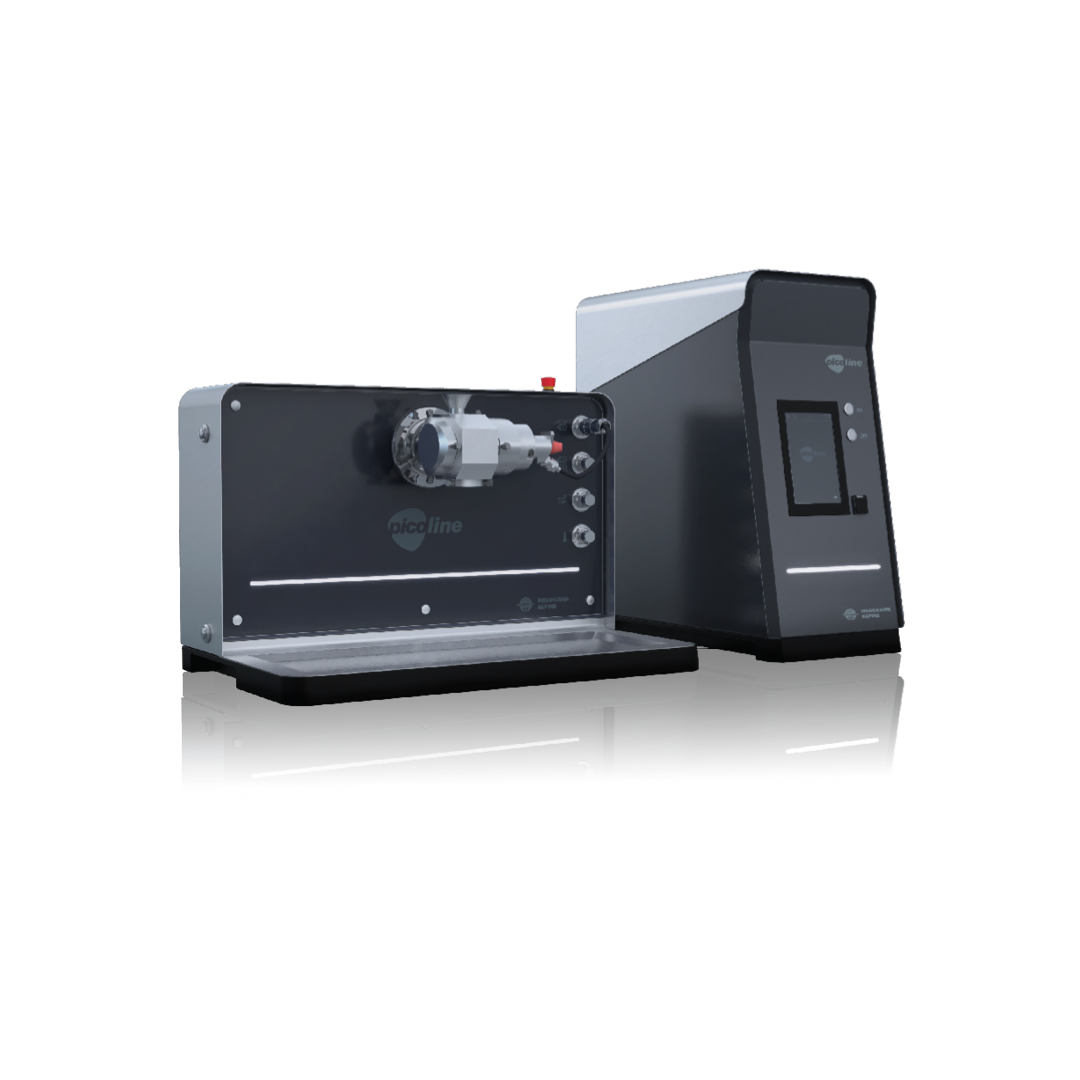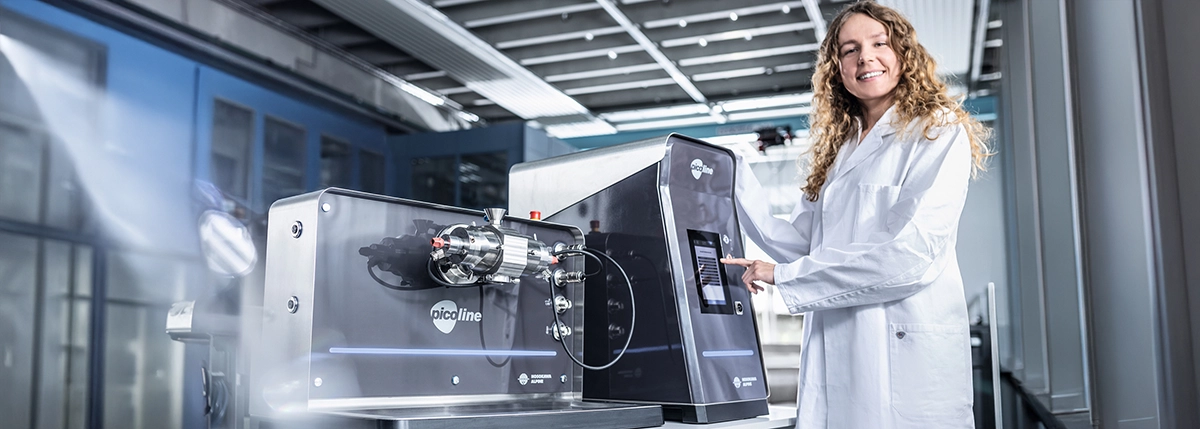
Picobond high-energy laboratory mixer
The Picobond high-energy laboratory mixer, available in two versions, not only mixes dry particles but also enables their targeted functionalisation. Precisely controllable process parameters and intensive mixing processes lay the foundation for reproducible results and bespoke product qualities. As part of the modular system, it can be easily integrated into the Picoline platform.
Your benefits at a glance
- Mixing reactor for the mechano-chemical functionalisation of dry particles (particle design)
- Mixing or intensive mixing (coating) possible
- Segregation prevention through mechanofusion
- Protection against product heating through process chamber cooling
- Can be purged with inert gas
- Easy filling and emptying
- Measuring devices for influencing the desired product quality (product temperature, rotor speed, motor power)
- Batch mode
- Parts in contact with the product are made of stainless steel
- Designs: Mechanofusion rotor with stator lid or inclined blade agitator, for contamination-free preparation
- The design and mode of operation largely correspond to the Nobilta from Hosokawa Micron B.V. or the AMS series from Hosokawa Alpine
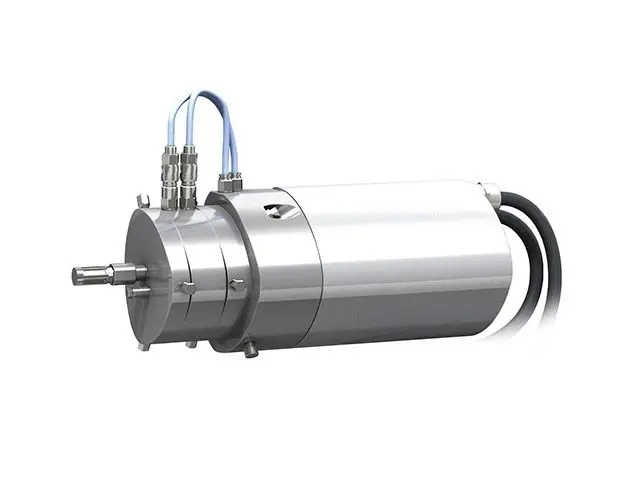
Technical specifications Picobond NOB
|
Process chamber volume |
approx. 220 ml |
|---|---|
|
Rotor drive |
630 W |
|
Rotor diameter |
40 mm |
|
Speed |
max. 8,000 rpm |
Technical specifications Picobond AMS
|
Process chamber volume |
approx. 190 ml |
|---|---|
|
Rotor drive |
630 W |
|
Rotor diameter |
40 mm |
|
Speed |
max. 7,300 rpm |
- The powder mixture is completely centrifuged by the rotor and moves as a circulating ring layer along the inner wall of the mixer housing.
- Stresses such as pressure, shear, impact and rebound are initiated within the compacted component fill in this ring layer.
- On contact with the following rotor element, the direction of action of the transmitted pulse changes. This creates a complex, three-dimensional material circulation, which causes intensive, repeated pressure, impact, bounce and shear stress as well as intensive mixing of the material.
- The high energy input into the mix compared to conventional mixing systems causes particle fusion, coating, agglomeration and particle rounding in addition to the basic operations such as macro and micro mixing.
- The powder mixture is forced into the gap between the rotating rotor and the stationary stator, whereby the stress mechanisms of pressure and shear occur.
- The formed edge layer is then separated from the inner surface of the rotor by a scraper and leaves the rotor through the side openings.
- In the outer area, the blades attached to the rotor cause a return transport into the processing area.
- This results in a permanent circulation of the material in the machine, which leads to the most homogeneous loading of the particle mixture possible.